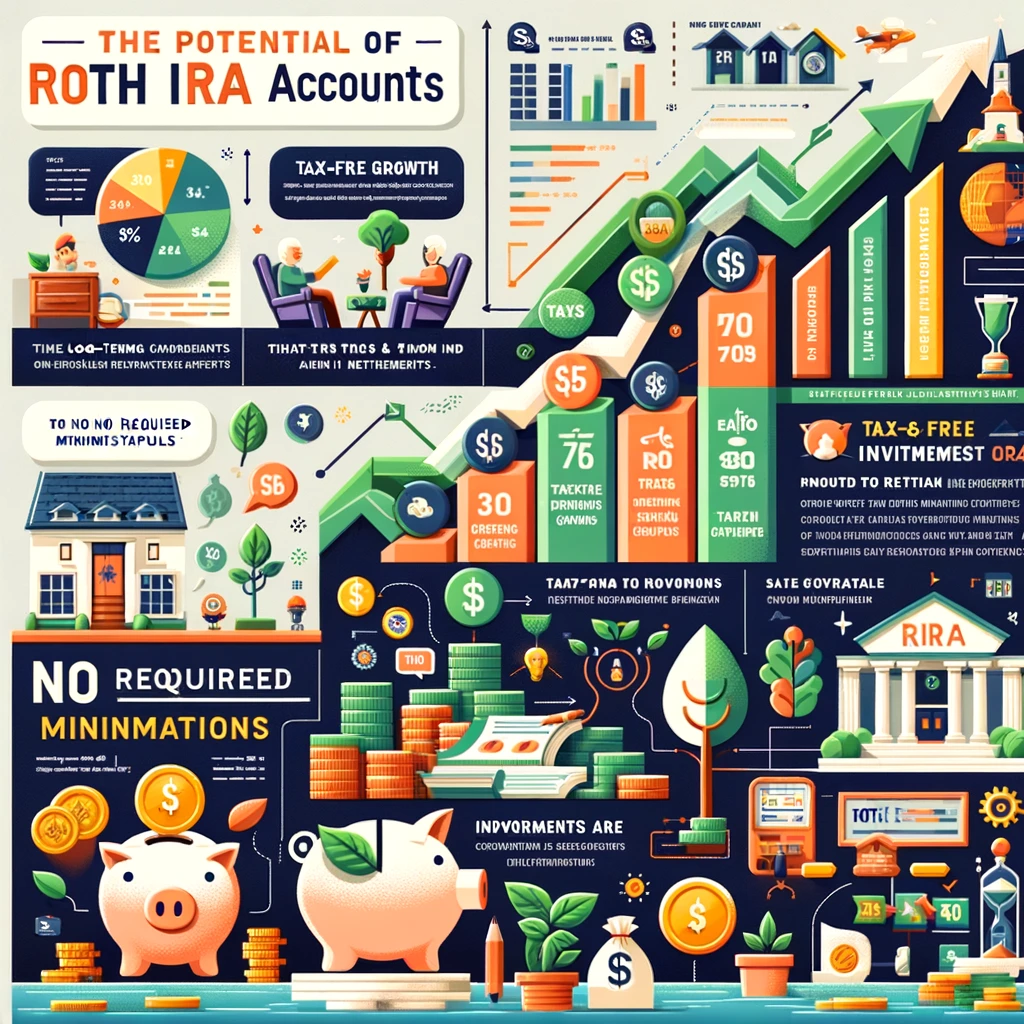
The Roth IRA is a unique retirement account that offers several benefits to investors. In this blog post, we’ll cover everything you need to know about the Roth IRA, from its benefits to its rules and regulations. We’ll also touch on how to get started with a Roth IRA and how to make the most of this retirement account. By the end of this post, you should have a good understanding of the Roth IRA and how it can benefit you.
Understanding The Roth IRA
A Roth IRA is a type of retirement account that allows individuals to make tax-free contributions. The main difference between a Roth IRA and other retirement accounts is that you can withdraw money from a Roth IRA tax-free at any time, regardless of how much money you have in the account. This makes it a great option for people who want to save for their future without having to worry about taxes.
How does a Roth IRA work? In order to contribute to a Roth IRA, you first need to meet certain eligibility requirements. These include being age 18 or older, having earned income that meets certain limits, and not being covered by an employer’s retirement plan. After meeting these requirements, you can then contribute up to $5,500 per year ($6,000 if you are 50 or older).
What are the benefits of a Roth IRA? Aside from the fact that contributions are tax-free, the main benefit of a Roth Ira is that your earnings grow tax-deferred within the account. This means that your earnings will be taxed only when they are withdrawn from the account in retirement. This is different than most other types of accounts where your earnings are taxed as soon as they’re deposited into your savings account.
Who is eligible for a Roth IRA? Anyone who is over age 18 and has earned income may contribute to a Roth IRA. Additionally, anyone whose spouse has earned income may also contribute (although this limit applies only if both spouses have earned income). Finally, any child under age 17 who has earned income may also make contributions on behalf of their parents (provided both parents have qualifying earned income).
The Benefits Of A Roth IRA
A Roth IRA is a great way to save for retirement. The money you put into a Roth IRA grows tax-free, so your savings grow faster than with other types of accounts. You can withdraw your contributions at any time without penalty, and even after you retire, you can continue to contribute to a Roth IRA if you want.
One big advantage of a Roth IRA is that you’re not required to take distributions at age 70 1/2 like you are with a traditional IRA. This means that your money will last longer and provide more stability in retirement. Plus, since your heirs inherit your account tax free, it’s an especially valuable option if you have children or grandchildren who may need help saving for their own future.
There are a few things to keep in mind if you’re thinking about opening a Roth IRA. First, you’ll need to make sure your employer offers this type of account. Second, you’ll need to estimate the amount of money you’ll need to save each year to have enough money available when you retire. Finally, it’s important to choose the right investments for a Roth IRA – stocks, bonds or commodities? It can be hard to decide which option is best for you, but with the help of a financial advisor or online retirement calculators, it’s not impossible.
If opening a Roth IRA is something that interests you, there are plenty of great options out there. The growth potential and tax benefits make them an especially valuable option for those planning on retiring soon or those who may not have much saved up already. Don’t forget – even if your salary isn’t high enough yet to qualify for a Roth IRA contribution all on its own, cashing in some unused 401k contributions could still put some extra money into your account each month!
Rules And Regulations Of A Roth IRA
For individuals who are nearing retirement, a Roth IRA is an excellent way to save for the future. The Roth IRA offers tax-free growth and tax-free withdrawals in retirement, which can be extremely beneficial. Contributions to a Roth IRA are made with after-tax dollars, meaning you have already paid taxes on the money you contribute. Additionally, there are no age or income restrictions on who can contribute to a Roth IRA. This makes it an attractive option for people of all ages and incomes.
The following are some of the key rules and regulations of a Roth IRA:
-You must be at least 18 years old to contribute to a Roth IRA.
-You can make contributions up to $5,500 per year ($6,000 if you are 50 or older).
-Your Roth IRA will mature after you reach retirement age. When it matures, you can withdraw the money in any amount without penalty.
-If your original contribution was made before 2013, you may have had taxes withheld from your paycheck on top of what you contributed to your Roth IRA. This extra money is known as an “accumulation contribution credit.” If this is the case, you can claim this credit on Form 1040, line 53.
Getting Started With A Roth IRA
If you’re interested in starting a Roth IRA, there are several things to keep in mind. First of all, a Roth IRA is an individual retirement account (IRA) that offers tax-free growth and tax-free withdrawals in retirement. Contributions to a Roth IRA are not deductible from your taxes, which means that you can save more money overall without having to worry about paying taxes on the contributions later on. The income limits for contributing to a Roth IRA are $118,000 for singles and $186,000 for married couples filing jointly. You can contribute up to $5,500 ($6,500 if you’re age 50 or older) each year to a Roth IRA.
If you want to start investing immediately and don’t have time to do research on various types of investments or IRAs, consider using an online broker like Schwab or Vanguard. These brokers offer instant access to many different types of stocks and bonds as well as ETFs (exchange traded funds). Online brokers also often offer lower commissions than traditional brokerages.
An online brokerage like Schwab or Vanguard lets you invest in stocks and bonds right away through their websites with low commissions attached. Additionally, these brokers often offer greater variety when it comes to choosing which stocks and bonds to buy than traditional brokerages do – making them more suitable for those who want immediate access to investment options rather than detailed guidance from a financial advisor.
Investing In A Roth IRA
Investing in a Roth IRA is a great way to save for retirement. Roth IRAs offer many benefits, including tax breaks and the ability to grow your money over time. With a Roth IRA, you can take advantage of compounding interest to help your savings grow even faster. Additionally, investing in a Roth IRA comes with numerous investment options that allow you to find the right fit for your needs. So, whether you’re looking for conservative or aggressive growth potential, there’s likely an option available that’s perfect for you.
One of the benefits of investing in a Roth IRA is that you can take advantage of tax breaks. In fact, if you’re carrying over any earnings from your previous year’s contributions into your new Roth IRA account, you will be eligible for a federal income tax deduction on that amount. This means that not only will your investment grow faster thanks to compounding interest, but you’ll also effectively reduce your taxable income in the process.
Another great benefit of investing in a Roth IRA is the ability to grow your money over time. Unlike with other retirement accounts, such as traditional 401(k) plans and IRAs, which are limited in how much growth they allow for, Roth IRAs are open to all investors regardless of their age or employer contribution limits. This allows anyone interested in saving for retirement the opportunity to do so at their own pace – without worrying about hitting financial constraints early on.
There are many options available when it comes to investing in a Roth IRA account, so there’s sure to be something that fits within your budget and meets your desired investment goals. Whether you’re looking for conservative or aggressive growth potential, there’s likely an option available that’s perfect for you. So, don’t hesitate – start planning today and invest in yourself!
Withdrawing From A Roth IRA
If you’re considering withdrawing money from a Roth IRA, there are a few things to keep in mind. First of all, you can withdraw your principal at any time without penalty. This means that you’ll only lose the investment return you’ve earned up to this point – there’s no risk of losing any additional money. Additionally, withdrawals of earnings are taxed as regular income. This means that if you’ve been contributing money regularly to a Roth IRA, your withdrawals will be significantly more expensive than if you had simply deposited the same amount into an account with a traditional bank. Finally, if you’re under age 59 1/2 and make a withdrawal before the end of the year in which you turned age 59 1/2, you may be subject to a 10% early withdrawal penalty (unless certain exceptions apply).
Converting A Traditional IRA To A Roth IRA
If you are thinking of converting your Traditional IRA to a Roth IRA, now is the time to do it. There are no income limits for converting, and you will pay taxes on the conversion but not on future withdrawals. This can be beneficial if you think your tax rate will be higher in retirement than it is now. For example, if you anticipate that your income will increase significantly after you retire, a Roth IRA may be a better option than a Traditional IRA.
There are a few things to keep in mind when converting your Traditional IRA to a Roth IRA. First, you will have to pay income taxes on the entire amount of the conversion, even if you don’t use the money right away. Second, any future withdrawals from your Roth IRA will be tax-free. This means that even if your income increases after you convert your Traditional IRA, you can still enjoy tax-free growth and retirement savings. Finally, remember that there is an age limit of 70½ for converting a Traditional IRA into a Roth IRA. If you are over 70½ years old, a trustee or custodian may be able to help with the conversion process.
Roth IRAs Vs. Traditional IRAs
There are a few key differences between Roth IRA and traditional IRA accounts, the most important of which is that Roth IRAs offer tax-free growth and tax-free withdrawals in retirement. This means that any contributions you make to a Roth IRA are free from taxes when you make them, and all future growth on your contributions is also free from taxes. This makes Roth IRAs an attractive option for people who want to save money for their retirement without having to worry about paying taxes on that money.
On the other hand, traditional IRA accounts offer tax-deferred growth. This means that you won’t have to pay taxes on the money you contribute to a traditional IRA until you withdraw it in retirement. However, once you do withdraw the money, any earnings on those funds will be taxed as normal. Therefore, if you expect to be in a higher tax bracket when you retire than when you’re currently living, a traditional IRA may be a better option for you.
Finally, one of the biggest deciding factors when choosing between a Roth or traditional IRA account is whether or not investors want the flexibility to withdraw funds from their account before age 59 1/2 . With a Roth IRA, funds can always be withdrawn without penalty (as long as they’ve been invested for at least five years). With a traditional IRA account however, there may be penalties associated with early withdrawals (although these penalties tend to be much lower than what would apply if the investor were making regular taxable withdrawals).
To Wrap Up
When it comes to retirement planning, a Roth IRA is one of the best options available. It offers tax-free growth and withdrawals, making it an ideal way to save for the future. Plus, there are no age or income restrictions on who can contribute, so anyone can take advantage of this account type. If you’re interested in starting a Roth IRA, be sure to research the different investment options available and compare them against your financial goals. With a little planning and effort, a Roth IRA can be a great way to secure your financial future.