The cost of college education continues to rise endlessly. Tuition fees increase twice as high as the inflation rate, rising by an average of about 8% per year. At this rate, the cost of college education will double every nine years.
Many parents are understandably concerned about paying for their children’s higher education – especially parents of young children who could be a decade or more away from going to college. The good news is that there are a number of different savings vehicles available to help you save money on college fees.
529 Plans: pros and cons
529 Plans: pros and cons
getty
Section 529 plans are one of the most popular energy-saving vehicles. These accounts allow you to save money on a deferred tax basis as you invest in market-based instruments to potentially increase your savings. Also, there are no annual contribution limits for 529 plans and income limits for opening a plan.
But there is one potential drawback to 529 plans: the money you save must be used for qualified education costs. If your child chooses not to attend college or receives scholarships or other financial aid and does not need savings to pay for college, the funds will be subject to tax and a 10% penalty on withdrawal.
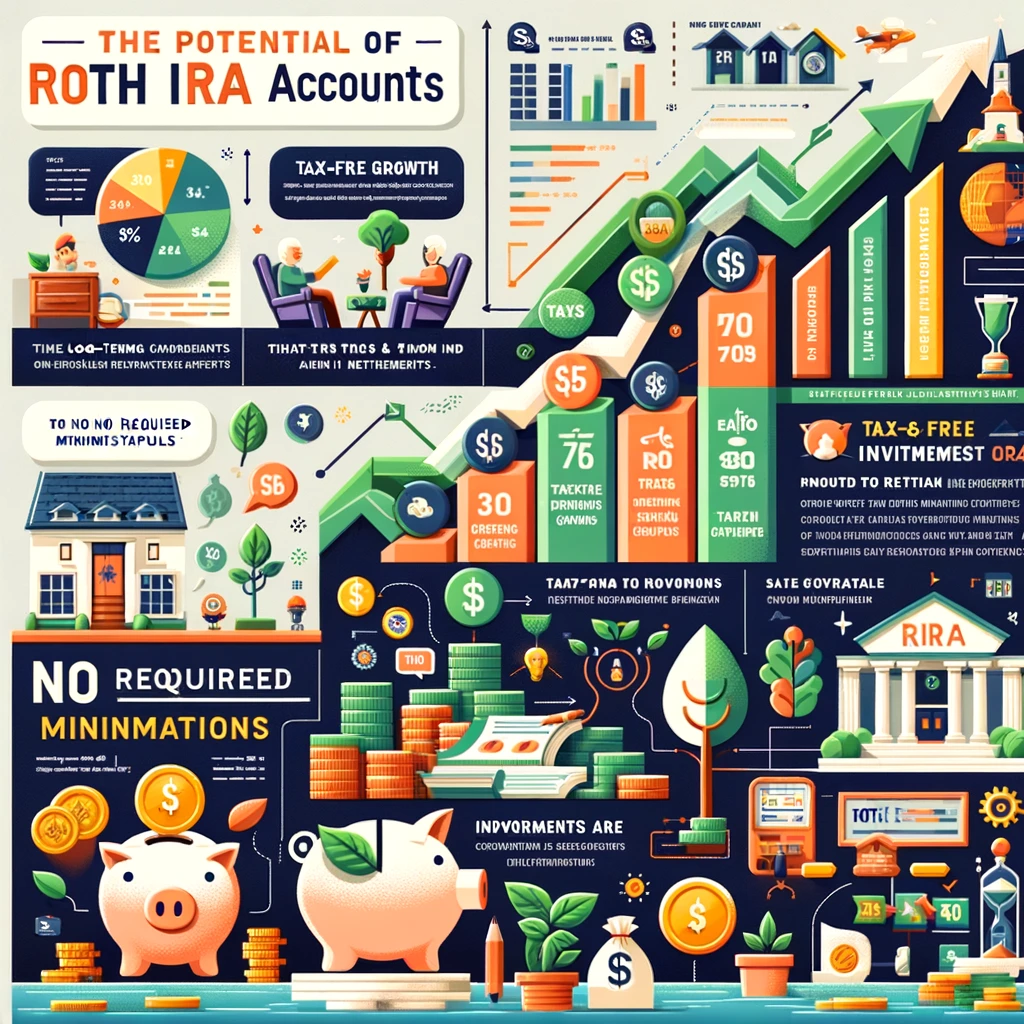
This is why some families take a different approach using the Roth IRA to save money for college. Roth IRAs are usually considered a tool for retirement savings, but their flexibility makes them able to kill two birds in one go – saving for both retirement and college.
Roth IRA nuts and bolts
Roth IRA nuts and bolts
getty
In traditional IRAs, funds cannot generally be withdrawn before the age of 59½ without taxes and a penalty of 10% early withdrawal. But Roth IRAs are different. Contributions to Roth IRAs are made after taxes — in other words, the money is already taxed. Thus, tax or penalty is not assessed when these contributions are withdrawn, no matter how old you are.
Please note that while contributions (or principal) and converted and overturned funds may be withdrawn from a Roth IRA at any age without taxes and penalties, the same does not apply to Roth IRA earnings. If you withdraw Roth IRA funds 59.5 years ago, all money earned by investing is subject to taxation at your current normal income tax rate and a 10% penalty. (There are exceptions for disability, death, and buying a first home.)
Also, it must have been five calendar years since you opened the Roth IRA and made your first contribution to avoid taxes and penalties on raising earnings.
What about retirement?
What about retirement?
getty
Using a Roth IRA to pay for college expenses raises an important question: Can this strategy jeopardize your financial security when you retire? After all, the primary purpose of an IRA for most people is to help secure a financially comfortable pension.
The answer to this question will depend on factors such as whether or not you have other potential sources of retirement income and how much of your Roth IRA you withdraw to pay for college.
One strategy used by some families is to use part of their Roth IRA principal for college expenses and leaving earnings in a retirement account.
Another strategy is to use the Roth IRA as a complementary savings tool for Plan 529. For example, you could add half of your allocated college savings to Plan 529 and half to the Roth IRA. This would help you achieve greater diversification of savings in college by allocating money to a wider choice of investment instruments.
For example, using your own Roth IRA to invest in income-generating real estate through private equity, private debt, or fundraising opportunities allows investors to diversify their portfolios beyond typical non-trading private investments.
Can you open up to the Roth IRA?
Can you open up to the Roth IRA?
getty
It is important to note that there are revenue limits for opening a Roth IRA. In 2021, your modified adjusted gross income (MAGI) must be $ 140,000 or less if you are single or $ 208.00 or less if you are married and applying together to open and contribute to the Roth IRA.
If you qualify for the Roth IRA, you can deposit up to $ 6,000 per year into your 2021 account, or $ 7,000 if you are 50 or older. This assumes that your MAGI is less than $ 125,000 (if you are single) or $ 190,000 (if you are married). If your MAGI is between $ 125,000 and $ 140,000 (if you are single) or $ 198,000 and $ 208,000 (if you are married), you can make a smaller annual contribution.
Please contact your financial advisor if you have additional questions about using the Roth IRA or self-directed Roth IRA as a savings tool in college.
The information provided in this article is educational content, not investment, tax, or financial advice. You should consult a licensed professional for advice on your specific situation.