In the late 1990s, PayPal co-founder Peter Thiel invested less than $ 2,000 in the founder’s stock in his Roth IRA. Those stocks reportedly climbed to about $ 5 billion, and Thiel will not owe income tax if he waits until the age of 59 to withdraw the money.
Profit of that size – presented in a recent ProPublic report based on internal revenue service documents – ordinary investors are unlikely to repeat. But they should follow Thiel’s leadership in one respect: Roth accounts are a great place for high-risk investments and high returns. (Thiel did not comment on the report.)
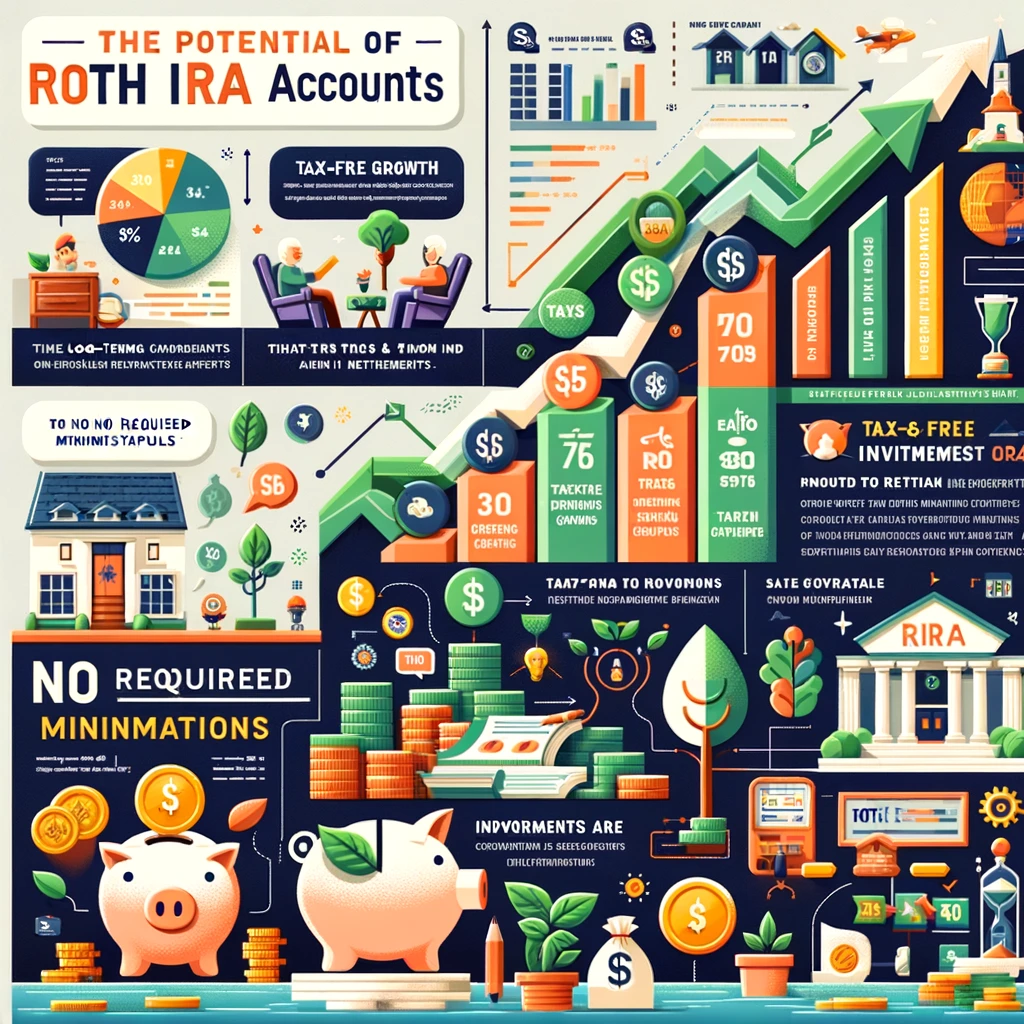
Unlike a traditional individual retirement account or 401 (k), Roths are funded in dollars after tax. All the money you take out of Roth’s individual retirement account is tax-free, as long as you are at least 59½ years old and have a Roth account open for five or more years.
Roth, because it can offer decades of tax-free growth, is usually the last bill you need to empty in retirement. This makes it a perfect place for volatile investments like emerging stocks or small capitalization stocks.
“Risky things should outweigh over time, as long as you can tolerate driving,” says Ann Gugle, a certified public accountant and financial advisor in Charlotte, NC
The tax fee should not determine your investment choice. The share of your savings that you put in risky assets and the share in safe assets should be determined by your risk tolerance, investment objectives and life stage. But once you decide on a financial plan, taxes are key in deciding which assets go to which accounts.
Google says it usually divides its customers ’funds into three bins: Roth accounts; deferred tax accounts; and taxable bills. He then begins to fill each bucket as if playing a “Tetris game.” Risky investments are best for Roth or, if they are tax efficient, for taxable accounts. Income-generating investments such as bonds or investment funds in real estate, along with less volatile stocks, or best for deferred tax accounts.
Financial advisors warn of exactly what investments and accounts vary from person to person. For example, investing in bonds generally makes more sense in a traditional IRA than in a Roth IRA. This is because they grow slower than stocks. Eventually you will be taxed when withdrawing funds from 401 (k), so it is better to put your fast-growing assets in a Roth account, where you will not pay taxes when you withdraw money one day.
But if you are a conservative saver who is heavily invested in bonds, you may end up holding bonds in your Roth if you run out of space for them in 401 (k) based on your target allocations. And if you’re an aggressive saver who’s all-in on stocks, you may end up with an unstable equity fund in your 401 (k) because you’ve run out of space on your Roth account or taxable account.
“
If you have a choice between a very large Roth account and a very large delayed response account, I think we would all choose a large Roth account.
”
The limits for direct contributions to Roth are relatively small, $ 6,000 per year for those under 50 and $ 7,000 for seniors. To make a full contribution, singles cannot earn more than $ 125,000, while married couples cannot exceed $ 198,000.
But many employers now give workers the option to pay money into Roth 401 (k) instead of the traditional 401 (k) with deferred tax. The Roth version makes special sense for young workers or others who are in low tax brackets; they are often better off paying taxes now instead of postponing them for the future. Contribution limits are much higher for Roth 401 (k) s than for Roth IRAs. Workers can pay up to $ 19,500 a year in version 401 (k), or $ 26,000 if they are over 50 years old.
In addition, some retirement plans allow workers to make post-tax contributions and then later redirect them to a Roth account, in what is called a “mega-back Roth”.
“It’s really important to look at the details of your plan,” says Google.
Many retirees, meanwhile, now own bulging Roth accounts thanks to Roth conversions. Congress lifted revenue limits for conversions in 2010, suddenly making the maneuver accessible even to wealthy seniors.
In these conversions, you transfer money from a deferred tax account to a Roth account while paying income tax on the money transferred. Conversions often make sense for people who retire early, who have not yet started collecting social security and who are in a relatively low tax bracket. By moving money from their deferred tax accounts, they reduce the minimum required distribution when they turn 72 years old.
“If you have a choice between a very large Roth account and a very large deferred tax account, I think we would all choose a large Roth account,” says Mike Piper, a certified public accountant from St. Louis. Louis who advises clients on tax planning.
Roths are also gaining in popularity with retirees looking to pass on wealth to the next generation. The money your heirs took from Roth is tax-free and they have 10 years to empty it after you die. Spouses, minor children and others are not subject to the 10-year limit.
Whether you’re 25 or 65, the strategy doesn’t really change for which investments belong to Roth. You want an asset with the greatest growth potential for the rest of your life, followed by a decade that you plan to leave to heirs. William Bernstein, Portland, Ore., Money Manager and author of the “Investor Manifesto,” holds only low-value assets and value in his personal Roth IRA.
Recent readings from Barron’s pension
“Roth should get the most risky asset with the highest return (and the least tax-efficient, within the aggressive category), for two reasons,” Bernstein writes in an email. “1. It has the longest time horizon. 2. Avoid most taxes. ”
Leo Marte, a financial advisor from Huntersville, NC, says Roths can also make sense for actively managed funds where fund managers trade. If you hold such a fund in a taxable account, you will pay the tax when the fund manager leaves the winning position.
“You don’t want actively managed funds in a taxable account because you’re going to die,” Marte says. “Much of the refund will go to taxes.”
Taxable accounts are good places for tax-efficient funds, such as total market funds with low turnover, says Larry Swedroe, co-author of “Your Complete Guide to a Successful and Safe Retirement.” Taxable accounts are also good for assets that can have large changes in value.
“The more volatile an asset is, the more valuable it is in a taxable account because of its ability to collect losses for tax purposes,” said Swedroe, chief researcher at Buckingham Strategic Wealth. “That way Uncle Sam shares the pain of the loss.”
Nonetheless, Swedroe says savers should make the most of preferential tax accounts, including Roths, before financing taxable accounts because they are the best way to build wealth over time.
Write to [email protected]